

What is hand surgery?
Hand surgery is a specialised area of medicine dedicated to diagnosing and treating problems affecting your hands, wrists, and the nerves running through your arms. My focus is on helping you regain function, reduce pain, and get back to the activities that matter to you.
-
Surgery isn't always the answer. In fact, many patients find relief through non-operative treatments. I frequently use a combination of approaches including hand therapy, custom splinting and therapeutic injections. I'll always explore these options first when appropriate for your condition.
If conservative measures aren't effective or if your condition specifically requires surgical intervention, I'll discuss the best approach for your individual situation.
-
To ensure the best care possible, I will need to know your medical history and current medications. Please inform me if you have a history of:
Bleeding disorders or are currently taking a blood thinning medication
Deep vein thrombosis or pulmonary embolism (blood clots)
Heart or lung issues
Diabetes (type 1 or type 2)
Smoking
Raynaud’s phenomenon
Complex regional pain syndrome (CRPS)
Steroid use
Joint infection (current or previous) or surgical site infections
MRSA
Some blood thinning medications (e.g. Plavix, Xarelto, Eliquis, Pradaxa or warfarin) and some diabetes medications (Forxiga or Jardiamet) need to be ceased prior to your surgery. If this is not done you may not be able to have your surgery. If you have not been given a plan for your medications please contact my rooms.
-
The majority of hand operations are done as day case procedures. You'll arrive in the morning and return home later that day.
For many cases, the anaesthetist will use a nerve block technique - a targeted injection that temporarily numbs your arm while keeping you comfortable and either awake or mildly sedated based on what you prefer. This approach allows for excellent pain control during and after your procedure.
In specific situations - such as paediatric cases, particularly lengthy operations, or certain complex reconstructions, general anaesthesia with an overnight observation period may be recommended. Occasionally, straightforward procedures can be done with simple local numbing at the treatment site.
The structures in your hand are remarkably small and intricate. To work safely and effectively with these delicate tissues, magnification is often required - either through surgical loupes (specialised magnifying glasses) or a high-powered operating microscope, particularly when working with the fine blood vessels and nerve fibres in your hand and fingers. For procedures involving bones, x-ray imaging may be used during surgery to ensure accurate positioning and alignment. Radiation exposure is kept to the absolute minimum necessary for safe and effective treatment.
-
My assistant will confirm your fasting time. This is usually 6 hours of no food. Clear fluids (water, apple juice, black tea or black coffee with NO MILK) can be continued until 2 hours prior to your surgery. For morning surgery, food should be stopped after midnight but clear fluids are allowed until 6am. For afternoon surgery, you may have a light breakfast before 6:30am but no food afterwards and clear fluids until 10:30am.
Prescribed medications may be taken with a sip of water less than two hours prior to surgery unless you are otherwise directed.
The anaesthetist will see you on the day of surgery and may contact you before. If you have any particular concerns you would like to discuss with the anaesthetist please let my assistant know and she will ask them to call you.
-
Following the surgery, you will be taken back to the ward. You will be sent home with pain relief as prescribed by your anaesthetist. You should not drive if you have a splint, plaster or bulky dressing on your hand.
Pain management
Regular paracetamol and anti-inflammatories (if tolerated) are the mainstay of pain treatment. Ice packs can also provide good pain relief when applied regularly. Some patients will be prescribed stronger pain relief, which can be phased out as your comfort level increases.
After the operation, often all or parts of your hand will feel numb. If this was not present before the operation, it is normally due to local anaesthetic given to reduce any discomfort. It will wear off over the next few hours or by the next day. You may experience pins and needles during this process. You should take some pain killers before you go to bed on the first night after your operation, even if you have no pain at the time. After a ‘block’, you should keep your arm in a sling until you have regained full control and power in your arm.
Elevation
Elevation is crucial following hand and wrist surgery - it is one of the most important things you can do to aid your recovery. Keep your hand elevated above the level of your heart as much as possible, especially in the first 48-72 hours. Proper elevation significantly reduces pain, minimises swelling, and prevents finger stiffness. Excessive swelling is also detrimental to wound healing and can cause plaster casts and splints to become dangerously tight.
Wound care
Your dressing should be kept clean and dry. There may be plaster of Paris within the bandage. It is vital that this remains dry. A plastic bag over your dressing while showering is advisable.
When will I be seen in clinic?
The first follow-up appointment with me is usually in the week following your operation. Sometimes the hand therapists will need to see you before my appointment. If this is the case, I will tell you before you leave the hospital.
Hand exercises
Your healing doesn't end when the operation is complete. Regular hand exercises are a simple but vital part of your recovery. For many procedures, working with a specialised hand therapist is a crucial part of achieving the best possible outcome. Hand therapy helps you safely regain movement, manage scarring, rebuild strength, and maximise your long-term function.
I will arrange hand therapy for you when required. At your post-operative appointment, you have the option of seeing a hand therapist at Hand Works, which is conveniently located within the same building as my consulting rooms. Hand therapy is billed separately from my surgical fees. If you have private health insurance with ‘Extras’ cover, you may be able to claim a portion of the fee, and medicare rebates may be available. Please ask for details about costs.
-
If you experience any of the following post-operatively please inform my rooms:
• heavy bleeding from incisions which does not stop. First try to make it stop bleeding by raising your hand up above your head and pressing firmly with your other hand for 5 minutes (no dabbing or peeping to see if it has stopped; just constant firm pressure)
• your fingers appear dusky (grey or dark blue) or cool
• your fingers have pins and needles or become numb after the effects of the local anaesthetic have worn off (after approximately 24 hours)
• a tight or painful plaster cast or dressing
• severe pain not controlled by your prescribed tablets
• the bandage or plaster gets wet, becomes loose, dirty or floppy
• smelly discharge from your wound
• redness around an incision that is spreading
• temperature higher than 38.5C or chills
• worsening flexibility or inability to move the joint
If you have any concerns during your post-operative recovery, please do not hesitate to contact Dr Eleanor Houghton on 9212 4200 or houghtonadmin@perthortho.com.au

Hand and wrist surgical procedures
Not all problems require surgery. I work closely with patients and allied health professionals to explore the full range of treatment options, including non-surgical management where appropriate. When surgery is the chosen option, I perform a wide range of procedures for conditions. Please click on the links below for more information.

Hand and wrist trauma
Wrist fractures including distal radius and scaphoid
Ligament injuries including volar plate sprains

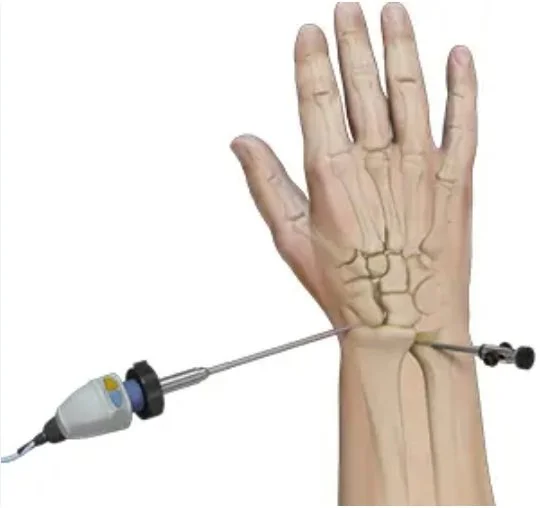
Wrist arthroscopy
Diagnostic arthroscopy
TFCC repair and reconstruction
Carpal instability
Arthritis
Ganglion excision
Fracture fixation including scaphoid nonunion