
Dupuytren's contracture
Understanding the condition
Dupuytren's disease (also called Dupuytren's contracture) is a progressive fibroproliferative disorder affecting the palmar fascia - the connective tissue layer beneath your palm's skin. The condition typically emerges in middle age or later, with greater prevalence in men than women.
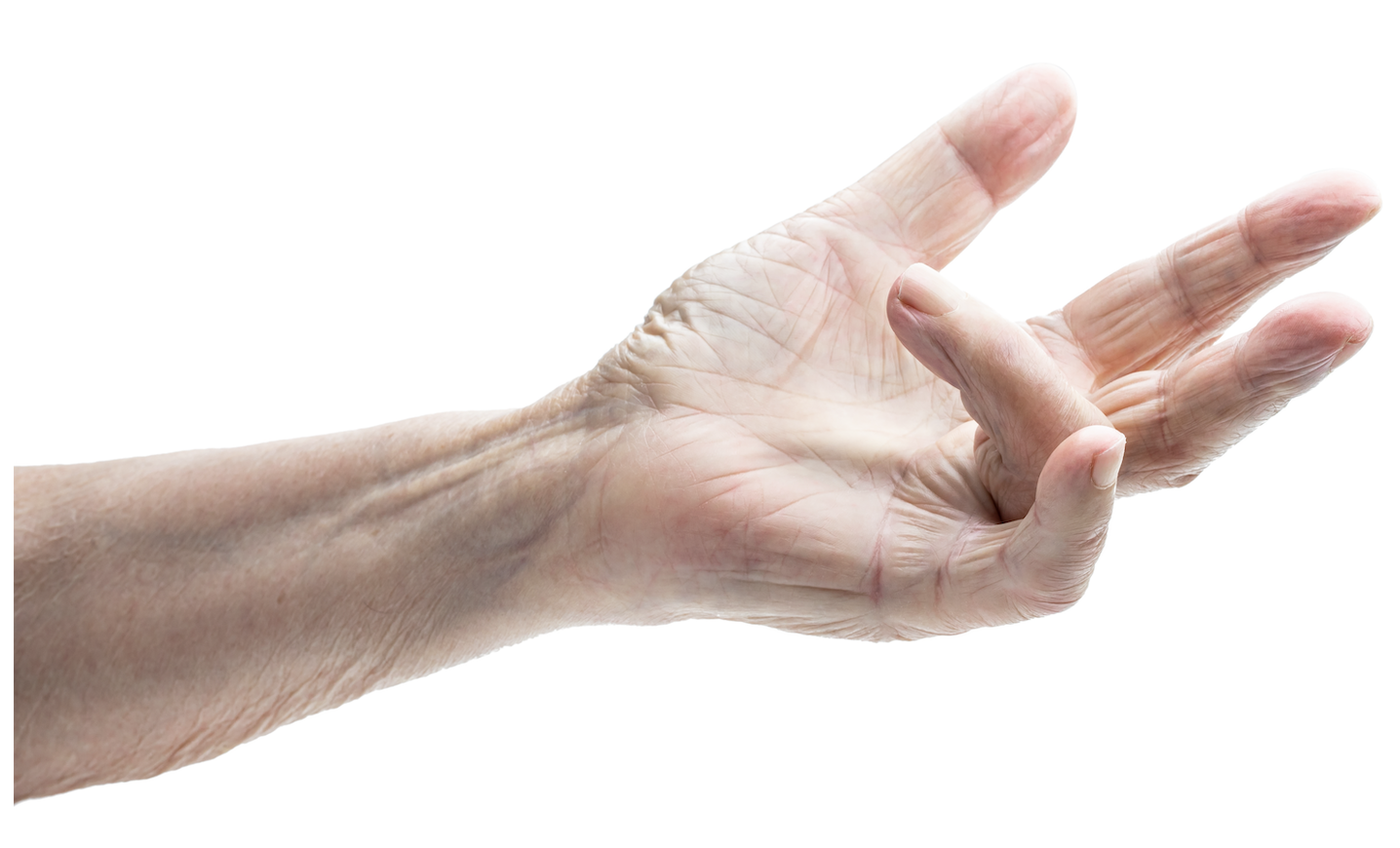
The disease manifests as firm thickened areas (nodules) within the palm's fascial bands. These nodules may progress to form cord-like structures that gradually pull one or more fingers toward the palm, limiting extension. Skin dimpling or pitting often accompanies the nodules and cords. Some patients also develop thickened areas over the knuckles (Garrod's pads) or similar changes on their foot soles (plantar fibromatosis).
-
The precise aetiology remains unclear. The condition shows strong geographic clustering in Northern European populations and frequently demonstrates familial inheritance patterns.
Associations exist with diabetes mellitus, tobacco use, and significant alcohol intake, though many affected individuals have none of these risk factors. Evidence doesn't support occupational manual labor as causative. Occasionally, the disease appears following hand or wrist trauma or after surgical procedures in these regions.
-
Dupuytren's typically begins with palmar nodules, commonly aligned with the ring finger. These thickened areas may feel tender when pressed initially, though discomfort nearly always subsides with time.
In approximately one-third of cases, the nodules evolve into fibrous cords that progressively draw the affected digit into flexion, preventing full straightening. Without intervention, fingers may become permanently contracted. The first web space (between thumb and index finger) sometimes becomes narrowed.
Contracture progression typically occurs gradually over months to years rather than rapidly.
-
No treatment eliminates Dupuytren's disease permanently. Surgical intervention can improve finger position - often substantially though not always completely - but cannot eradicate the underlying pathology. Recurrence in treated areas or disease emergence in previously uninvolved regions may occur over time. However, most surgical patients require only a single procedure during their lifetime.
When to consider intervention:
Surgery isn't necessary if you can fully extend your fingers. The timing of surgical intervention is highly individualised - some patients are comfortable accepting more contracture than others, depending on their occupation, hobbies, and functional requirements.
Inability to place your palm flat on a table surface represents an appropriate time to discuss your options. Generally, surgery becomes advisable when the contracture bothers you (for example, if your finger catches when putting your hand into a pocket), if it's affecting your hobbies or work, or if it is progressing rapidly. Interestingly, in very severe contractures where the finger curls completely into the palm, it may actually become less problematic as it's tucked out of the way, and many patients at this stage choose to leave it untreated.
I'll recommend the procedure best suited to your disease pattern and timing that optimises outcomes. The operation can be performed under local anaesthesia, regional nerve block, or general anaesthesia.
-
Needle aponeurectomy: the contracted cord is simply divided in the palm, finger, or both locations using a needle through minimal access.
Limited fasciectomy: short cord segments are excised through multiple small incisions.
Fasciectomy: a single longer incision allows complete cord removal along its length. This procedure may require one or multiple Z-plasties (zigzag incisions to lengthen the skin) or a skin graft if the contracture is severe.
Dermofasciectomy: the diseased cord and overlying skin are removed together, with skin replacement using a graft (typically harvested from your arm). This approach is reserved for recurrent disease or extensive involvement in younger patients, as it helps reduce recurrence risk.
-
Post-operatively, you may wear a night splint to hold the finger(s) straight. Hand therapy plays a crucial role in recovery - particularly following extensive procedures or skin grafting - helping restore mobility and function.
Recovery varies considerably regarding both the degree of improvement achieved and the timeline. Final outcomes depend on multiple factors including disease extent and behaviour, the surgical technique required, and your individual healing response.