
Carpal tunnel syndrome
Understanding the condition
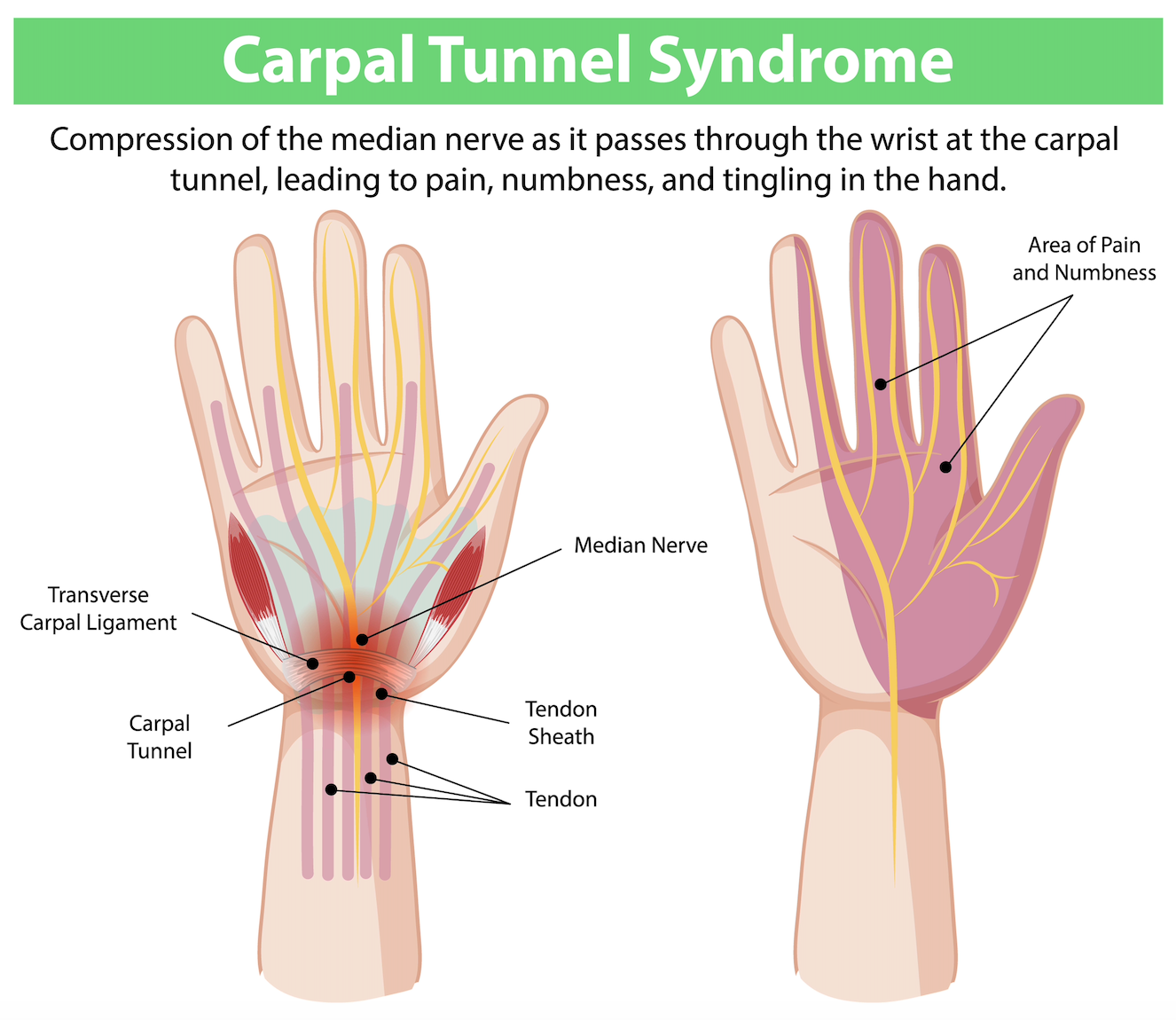
Carpal tunnel syndrome occurs when the median nerve experiences compression as it travels through a narrow passage at your wrist. This confined space also contains the flexor tendons responsible for finger and thumb movement.
While carpal tunnel syndrome most frequently affects middle-aged women, it can develop at any age in either gender.
Associated conditions include pregnancy, diabetes mellitus, thyroid dysfunction, and rheumatoid arthritis, though most patients have no identifiable predisposing factors.
The tunnel can become crowded due to tendon inflammation, wrist fractures, arthritic changes, or other less common pathology. However, in the majority of cases, no specific cause can be determined.
-
Sensory changes:
The hallmark symptom involves abnormal sensation in your thumb, index, middle, and ring fingers - the little finger typically remains unaffected. Patients commonly describe this as tingling or "pins and needles."
These sensations often intensify at night or upon waking. Gripping activities (holding phones, reading, steering) particularly when your hand is elevated can provoke symptoms. Early in the disease course, these episodes resolve spontaneously with normal sensation returning between episodes.
Progressive symptoms:
Without treatment, altered sensation may become persistent. Continuous numbness develops alongside:
Weakness in thumb movements
Visible muscle loss at the thumb base
Reduced dexterity with frequent object dropping
Complaints of general hand clumsiness
Some patients also experience discomfort extending into the wrist and forearm.
-
At your initial visit, I will calculate your CTS-6 score to determine the severity of your carpal tunnel syndrome. I'll also ask you to complete a Boston Carpal Tunnel Questionnaire, which provides a standardised measure of your symptoms and functional limitations. For subsequent follow-up appointments, I'll ask you to complete the Boston questionnaire again so that I can objectively assess your progress and response to treatment.
Electrodiagnostic studies may be necessary to confirm diagnosis. Blood work and imaging are occasionally indicated.
-
Conservative approaches include:
Nocturnal wrist splinting to maintain neutral positioning
Corticosteroid injections into the carpal tunnel
Pregnancy-related CTS frequently resolves spontaneously following delivery.
-
Surgery is often required for definitive treatment. The procedure involves dividing the transverse carpal ligament (the tunnel's constraining roof) to decompress the median nerve.
Open release: the traditional approach uses a small incision over the wrist, allowing direct visualisation while opening the ligament.
Endoscopic release: a minimally invasive alternative employs specialised instruments inserted through a small portal to divide the ligament.
Both techniques yield comparable results. I'll discuss which method suits your situation best.
The procedure can be performed under local anaesthesia (numbing only the operative site), regional nerve block (anaesthetising your entire arm), or general anaesthesia.
While uncommon, some patients develop constant numbness in their fingers or weakness in their thumb. If you experience these symptoms, surgery should be scheduled on a semi-urgent basis to minimise the risk of permanent nerve damage.
-
Most patients experience satisfactory symptom resolution. Nocturnal symptoms and intermittent tingling typically disappear within days of surgery.
Advanced cases with constant numbness and muscle atrophy may show slower, incomplete recovery. Complete strength restoration and scar maturation generally require approximately three months.
Common post-operative issues
Scar sensitivity is a frequent occurrence following surgery and can be managed effectively with scar massage techniques and hand therapy. Pillar pain - discomfort on either side of the incision - is also common and typically resolves within six weeks of surgery, though in some cases it may persist for up to six months.
Persistent hand tingling or numbness affecting your sleep or daily activities deserves evaluation. Contact your general practitioner to discuss your symptoms.