
Ganglion cysts
Understanding ganglion cysts
Ganglion cysts represent the most frequently encountered masses in the hand and wrist. These fluid-filled sacs contain thick, viscous, clear material and can emerge from various anatomical structures.
Four typical locations include:
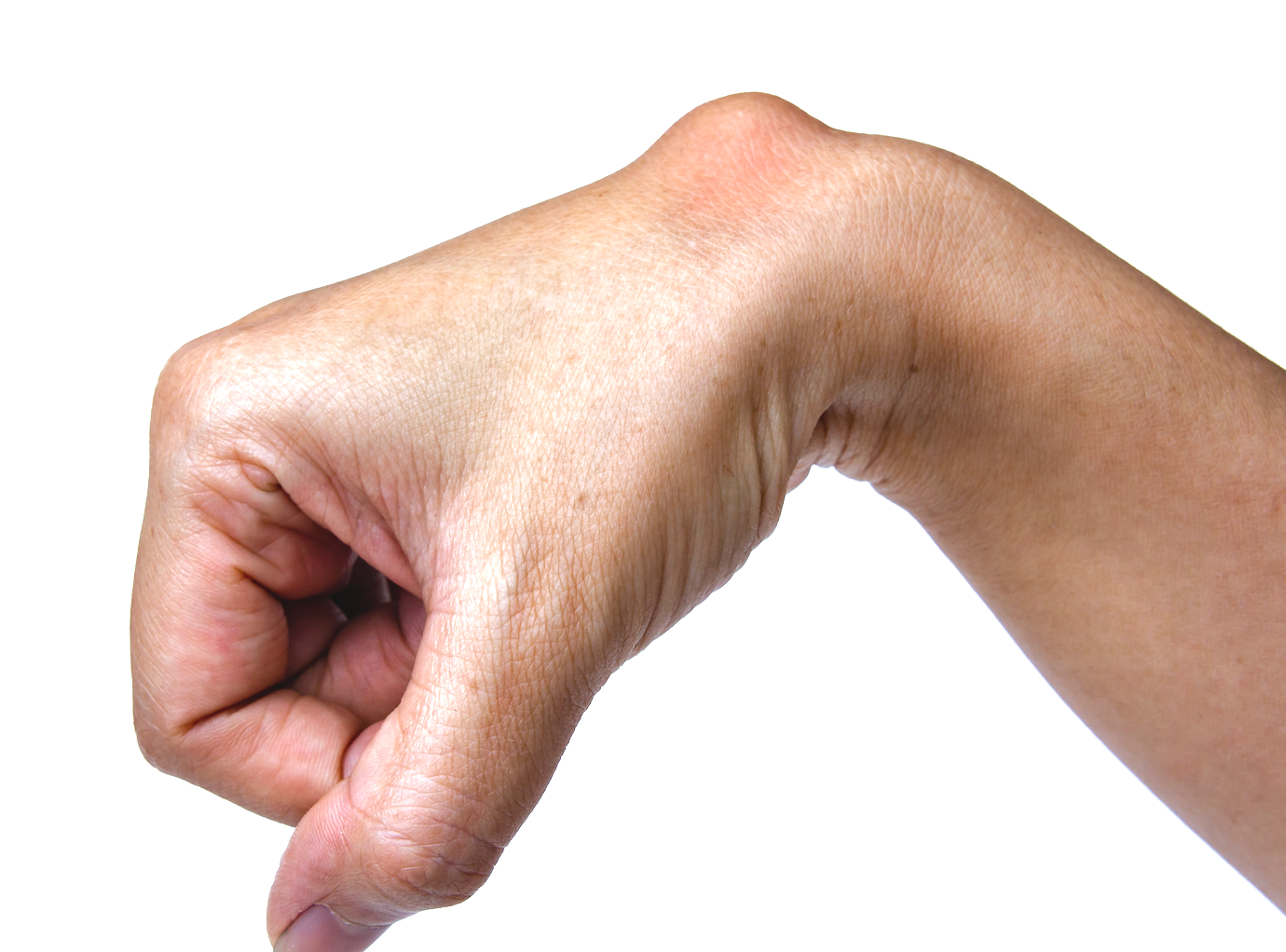
Dorsal wrist: arising from the scapholunate ligament on the back of your wrist
Volar wrist: developing from the wrist joint near the thumb base on the palm side
Flexor sheath: appearing at a finger's base on the palmar surface, originating from the tendon sheath
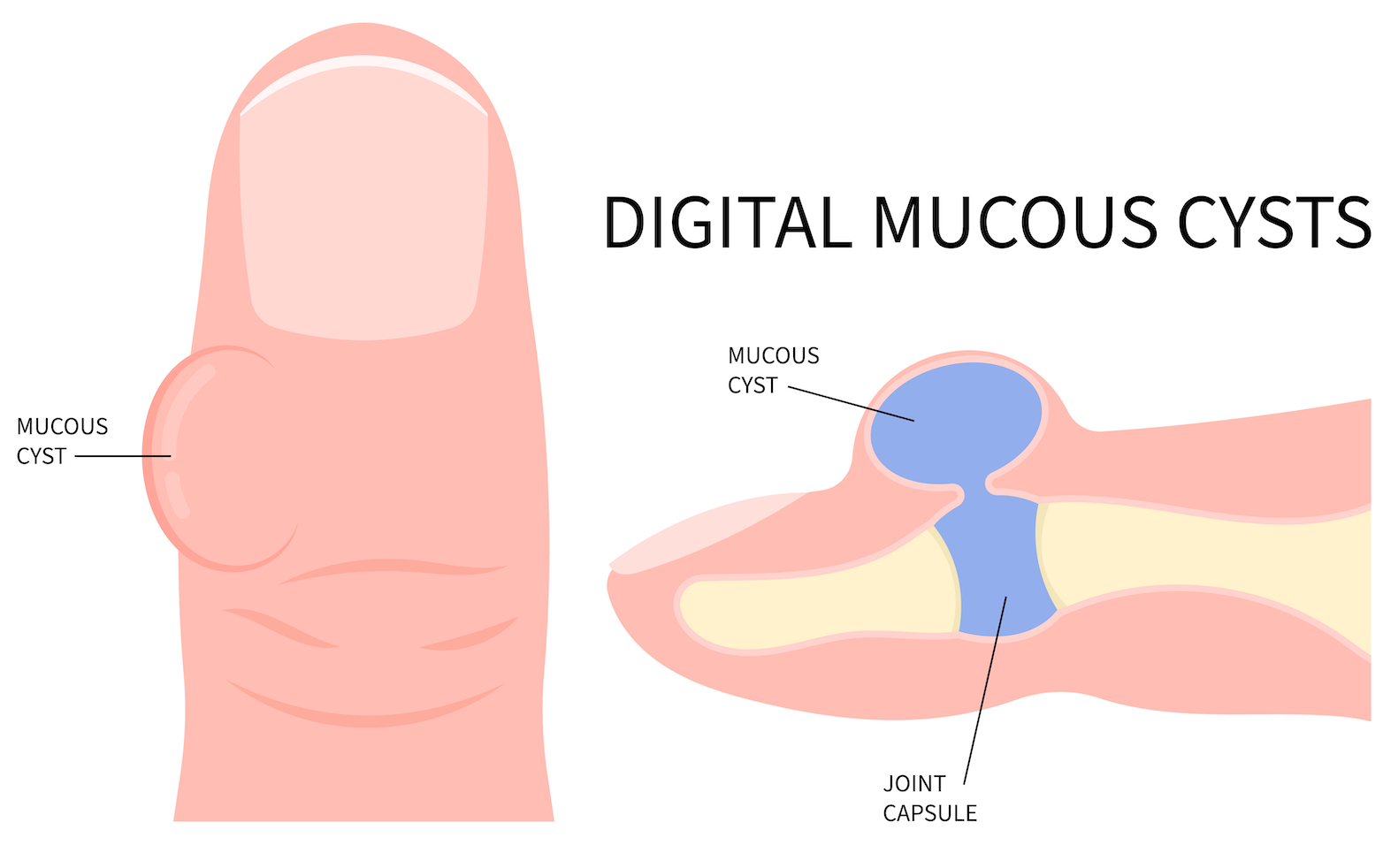
Mucous cyst: occurring over the distal interphalangeal joint on the back of a fingertip
Why they develop
Most ganglion cysts appear spontaneously without identifiable triggers. Occasionally, they follow trauma or develop in joints showing early degenerative changes.
-
A noticeable bump emerges, which may or may not cause discomfort.
Diagnosis is typically straightforward - ganglion cysts characteristically present as smooth, rounded swellings at predictable anatomical sites and often fluctuate in size over time. If clinical examination leaves uncertainty, imaging studies can confirm the diagnosis.
-
It is important to recognise that ganglion cysts are benign and pose no health risk. Many resolve spontaneously, and others remain asymptomatic. No adverse long-term consequences result from observation alone.
General treatment options include:
Reassurance with watchful waiting for spontaneous resolution
Aspiration (needle drainage) of cyst contents under local anaesthesia
Arthroscopic excision: some wrist ganglia can be excised with keyhole surgery through small holes on the back of your wrist
Open surgical excision
The recommended approach depends on the cyst's location and associated symptoms.
-
These commonly affect young adults and frequently disappear without intervention. Aspiration temporarily reduces the swelling but recurrence is common. Surgical excision carries approximately 10% recurrence risk. Potential complications include persistent discomfort, reduced wrist mobility, and nerve branch entrapment causing localised numbness or pain.
-
While seen in younger patients, these also occur alongside wrist arthritis in older individuals. Aspiration may help, though caution is necessary given proximity to the radial artery. Post-surgical recurrence approaches 20%, with similar complications to dorsal cysts.
-
Typically affecting young adults, these create a pea-sized nodule over the tendon at the finger base, often painful with gripping activities. Fine needle puncture can rupture the cyst - similar to deflating a balloon - with under half recurring. Persistent symptomatic cysts can be surgically removed with low recurrence rates.
-
Usually appearing in middle-aged or older individuals with early fingertip joint arthritis. The cyst may create a groove deformity in your fingernail. Occasionally, fluid intermittently leaks through the thin overlying skin. If this occurs, there is a risk of developing an infection which can communicate with the joint. Surgical excision and debridement of the underlying arthritic bony spur carries approximately 10% recurrence risk. Complications include infection, joint stiffness, and discomfort from the underlying arthritic joint.
Most ganglion cysts don't require treatment, but if yours is causing pain or functional limitations, please obtain a referral from your general practitioner.