
Wrist arthroscopy
What is wrist arthroscopy?
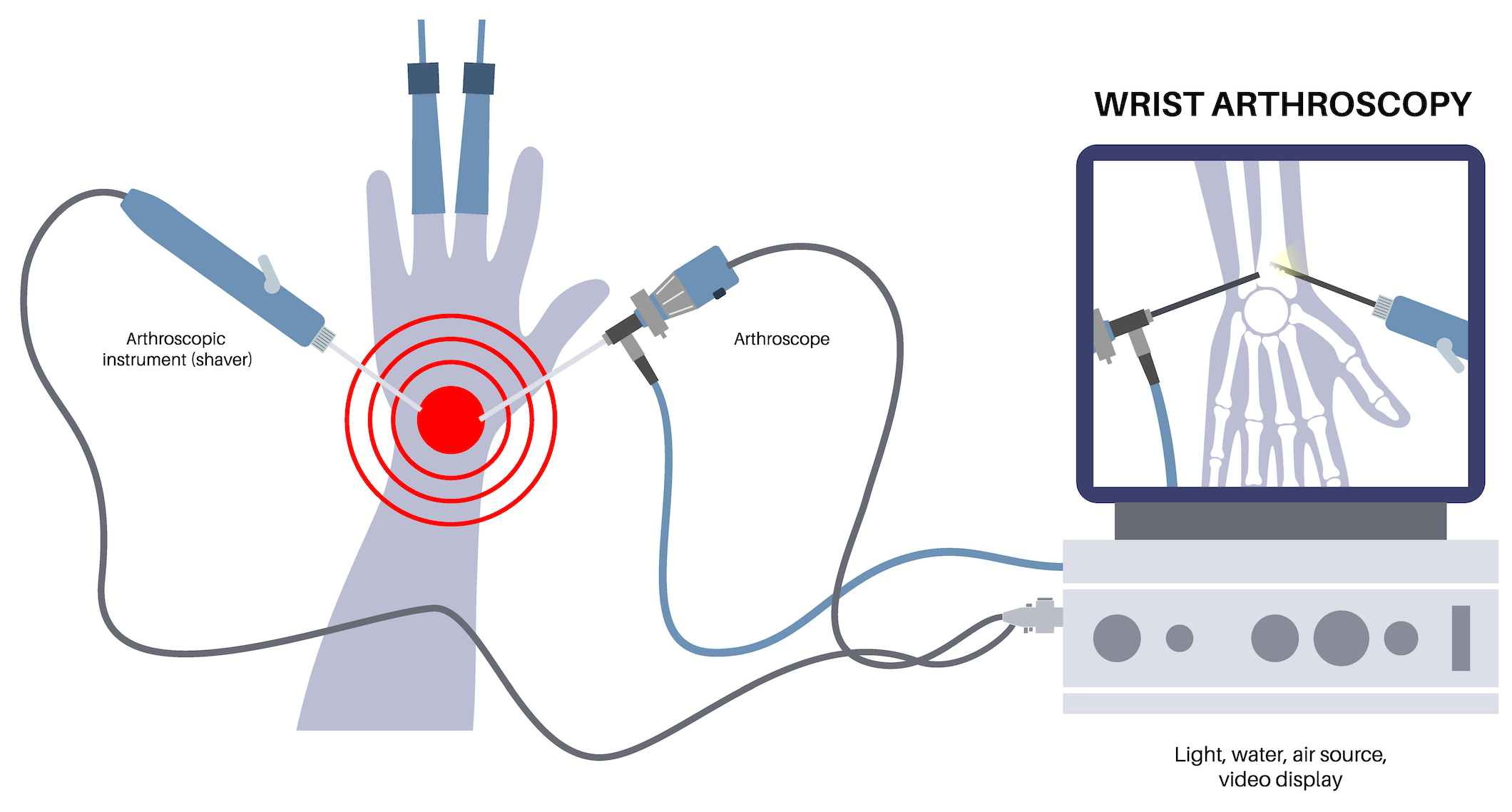
Wrist arthroscopy is a minimally invasive surgical procedure that allows me to examine the inside of your wrist joint using a small camera (arthroscope). The arthroscope is inserted through tiny incisions on the back of your wrist, providing a detailed view of the joint structures that cannot be seen with external examination or standard imaging alone.
This keyhole technique enables direct visualisation of your wrist's ligaments, cartilage surfaces, and bones, helping to establish an accurate diagnosis and guide further treatment decisions.
-
Wrist arthroscopy can be performed for both diagnostic and therapeutic purposes.
Diagnostic arthroscopy
Diagnostic wrist arthroscopy is recommended when the exact cause of your wrist pain or instability remains unclear despite clinical examination and imaging studies like X-rays or MRI scans. The procedure provides crucial information about the condition of structures inside your wrist, including:
The cartilage surfaces in the radiocarpal joint (between your forearm bones and wrist bones)
The midcarpal joint (between the two rows of wrist bones)
The distal radioulnar joint (between the radius and ulna at your wrist)
Important ligaments including the scapholunate ligament and triangular fibrocartilage complex (TFCC)
The findings determine what subsequent treatment you require - this might include ligament reconstruction, partial wrist fusion, scaphoid fixation, or other procedures, depending on the quality of the ligaments and cartilage found during the arthroscopy.
Therapeutic arthroscopy
In addition to diagnosis, arthroscopy allows me to treat certain wrist problems through the same small incisions. Therapeutic applications include:
Repair or reconstruction of wrist ligaments for instability (such as the TFCC and scapholunate ligament)
Excision of ganglion cysts
Treatment of scaphoid nonunion in selected cases
Resection arthroplasty for arthritic joints (removing damaged cartilage and bone from joints such as the scaphotrapeziotrapezoid (STT) joint or the thumb base joint)
Partial wrist fusions
Arthroscopy is not limited to the wrist - I can also use this technique to examine and treat joints in the hand, fingers, and thumb when appropriate.
-
Wrist arthroscopy is performed as a day case operation, meaning you'll go home the same day. The procedure is usually done under regional anaesthesia (a nerve block that numbs your arm) with sedation or general anaesthesia. Your anaesthetist will discuss the options with you.
During the arthroscopy, your wrist is held in gentle traction using finger traps to create space within the joint, allowing better visualisation. I'll make several small incisions (typically 3-5mm long) on the back of your wrist to insert the camera and fine instruments. Through these portals, I systematically examine all the structures within your wrist joints.
The entire procedure typically takes 30-90 minutes, depending on the complexity of your condition.
-
Wound care:
You'll have a few tiny incisions on the back of your wrist closed with dissolvable stitches. Keep your wounds clean and dry until healed (typically 10-14 days). For diagnostic arthroscopy, a bulky bandage will be applied to provide compression and support. You can reduce the bulk yourself approximately 48-72 hours after surgery by removing the outer layers of bandage and wool while leaving the inner sticky dressing intact.
Post-operative immobilisation:
If I've performed a therapeutic procedure (treatment rather than just examination), your wrist may need protection during the healing phase. In these cases, you'll have a plaster backslab applied at the end of surgery. This is typically transitioned to a removable thermoplastic splint over the course of 2-6 weeks, depending on the specific procedure performed.
Certain treatments - such as TFCC or scapholunate ligament surgery - require very specific hand therapy protocols to optimise healing and recovery. I'll arrange for you to work with a hand therapist who will guide your rehabilitation program.
Activity:
For diagnostic arthroscopy, gentle wrist and finger movements are encouraged from the day after surgery to prevent stiffness. Avoid heavy lifting or forceful gripping initially.
For therapeutic procedures, movement and activity restrictions will depend on the specific treatment performed - I'll provide you with detailed instructions tailored to your surgery.
Pain management:
Take regular over-the-counter pain medication as needed. Some discomfort and swelling are normal for the first few days.
-
I'll discuss the arthroscopy findings with you at your follow-up appointment, along with the recommended treatment options based on what was discovered during the procedure. This allows us to create a tailored treatment plan addressing your specific wrist pathology.
Wrist arthroscopy provides valuable diagnostic information that guides definitive treatment. If you have questions about the procedure or what to expect, please contact the practice.