
Mallet finger
Understanding the injury
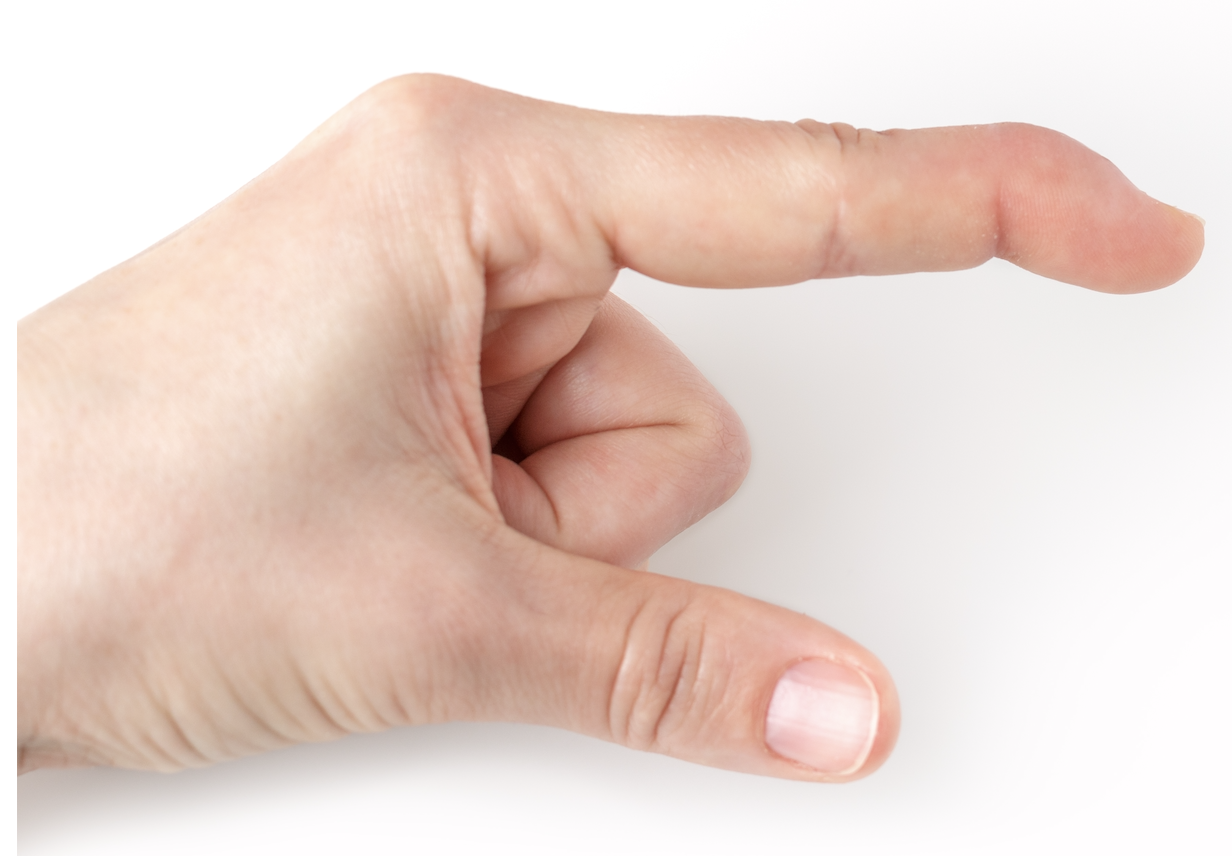
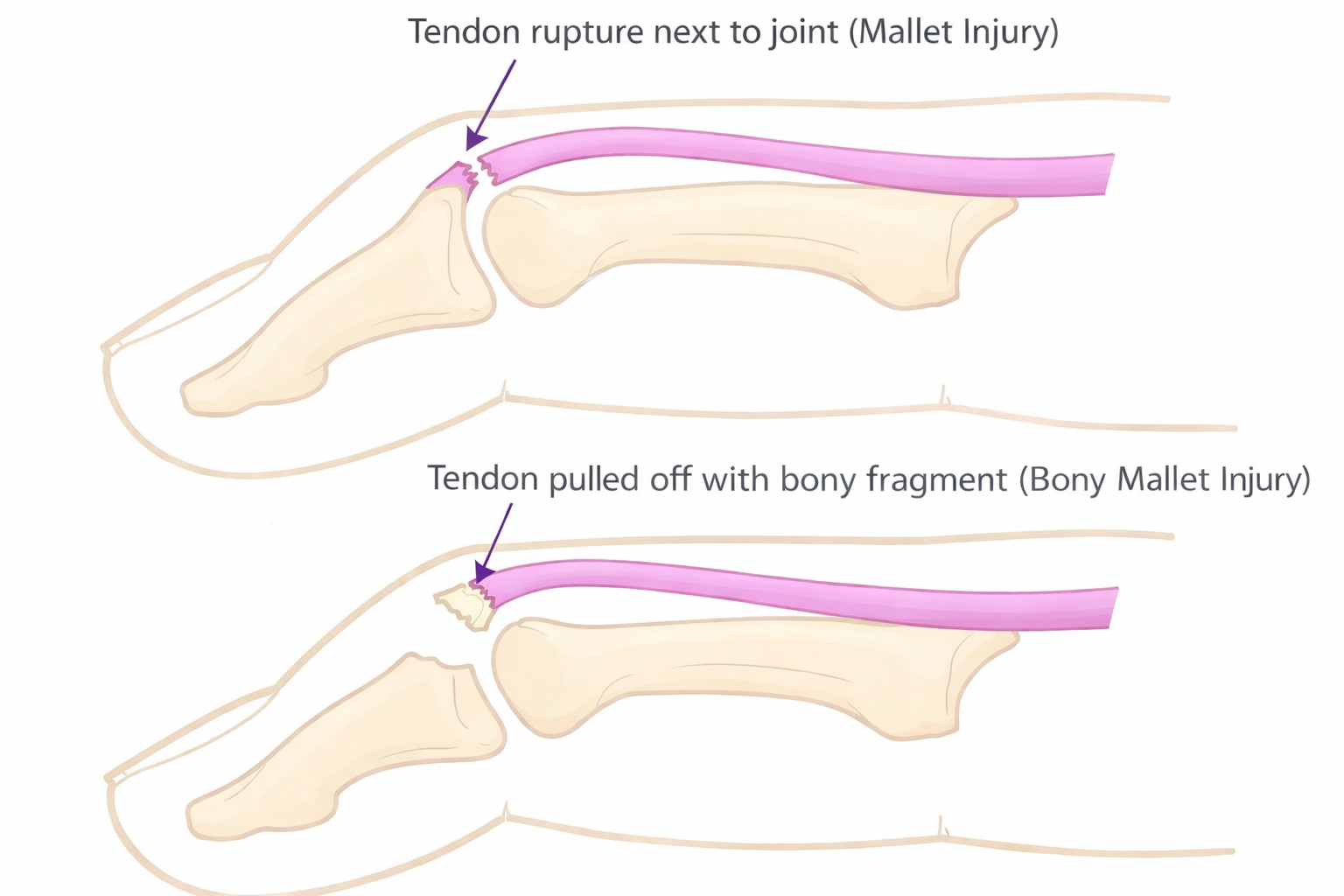
Mallet finger results from disruption of the extensor tendon that straightens your fingertip joint (distal interphalangeal joint or DIP joint). This injury commonly occurs during athletic activities when the fingertip receives axial loading (end-on impact), though seemingly trivial trauma like catching your finger while making a bed can also cause it.
The tendon may rupture at its insertion point on the distal phalanx bone, or it may avulse with a small bone fragment attached (termed a mallet fracture or bony mallet).
-
Localised discomfort and swelling at the fingertip joint
The finger rests in flexion at the terminal joint
Inability to actively extend the fingertip
Radiographic evaluation is essential to identify any associated fracture.
-
Splinting protocol
A splint maintains your finger in full extension at the DIP joint. Various splint designs exist, selected based on your finger anatomy and size.
Continuous splinting is required for eight weeks (tendon injuries) or occasionally shorter duration for bony mallets, which may consolidate more rapidly. Maintaining constant extension is absolutely critical - the fingertip must not flex even once during the treatment period.
When removing the splint for hygiene, you must support the finger in extension and prevent any flexion. I'll demonstrate safe splint removal and reapplication technique.
Following the initial immobilisation period, continue night splinting for an additional one to two weeks, plus during any activities risking re-injury.
Surgical intervention
Large mallet fractures with joint subluxation (loss of normal alignment) sometimes require operative fixation to restore joint congruity.
-
Most splint-treated injuries heal successfully with preserved finger function. A minor extensor lag (inability to fully straighten the joint) may persist after treatment completion. Functional recovery may progress gradually over several months.
Changes over the dorsal DIP joint - including erythema, oedema, and tenderness - commonly persist for three to four months post-injury but typically resolve.
Bony mallet outcomes
Healed mallet fractures may leave a small dorsal prominence at the joint and slight flexion limitation, though pain is uncommon and function generally remains good.
Treatment failure
Occasionally, tendon healing proves inadequate. Extended splinting may be attempted. Surgical reconstruction is possible but yields inconsistent results.
Mallet finger injuries require prompt appropriate splinting for optimal outcomes. If you've sustained a fingertip injury preventing extension, please seek evaluation promptly - early treatment improves prognosis.