
Finger dislocations
What happens in a dislocation?
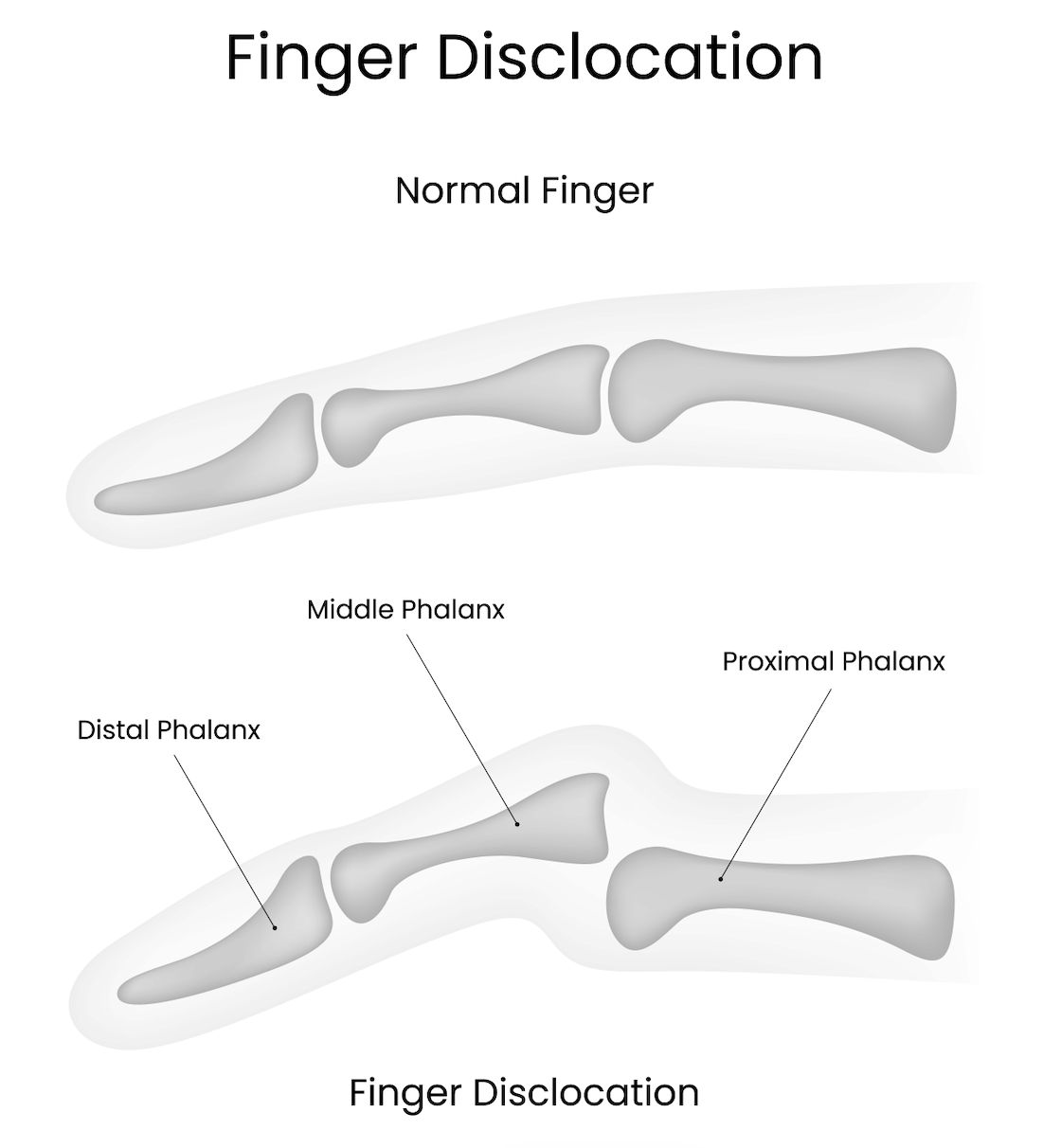
A dislocation occurs when the bone surfaces at a joint separate and lose their normal alignment. This injury can affect any joint in your fingers or thumb, though the middle knuckle (proximal interphalangeal joint or PIPJ) is most frequently involved.
The pattern of displacement depends on how force was applied during the injury. Some dislocations also involve bone fractures, which can complicate treatment and affect your recovery trajectory. The supporting ligaments around the joint - particularly those on the sides and front - may sustain damage, potentially leading to ongoing joint instability.
-
Most finger dislocations result from:
Falls
Sports-related trauma
Less frequently, assault or motor vehicle collisions
The injury mechanism involves abnormal force pushing the joint beyond its normal range. When this force exceeds what the stabilising ligaments can withstand, they fail and the bones shift out of proper position.
-
The primary goal is relocating the joint surfaces to their correct anatomical position. Many dislocations can be reduced with local anaesthetic in the emergency department - a relatively straightforward procedure. More complex injuries may require surgical intervention under anaesthesia.
Following reduction, you'll likely need protective splinting for several weeks combined with hand therapy. The rehabilitation program balances joint mobility with protection against re-injury. Your specific protocol depends on injury characteristics - I'll discuss this with you along with your therapist.
-
Straightforward dislocations typically heal with good functional restoration. However, these injuries shouldn't be underestimated. Some patients experience persistent joint stiffness requiring extended therapy or additional surgical procedures.
Fracture-dislocations
When the joint surface itself is fractured, residual stiffness becomes more likely. These injuries also carry increased risk of post-traumatic arthritis developing in that joint. While arthritis usually emerges gradually over years, occasionally it progresses more rapidly.
Ligament healing complications
Inadequate ligament healing can result in chronic joint instability, making the finger prone to repeat dislocations. An unstable joint may significantly impair finger function, potentially necessitating reconstructive surgery.
Finger dislocations require proper reduction and follow-up care. If you've sustained this injury, prompt medical attention ensures the best outcome.